Showing posts with label dentist. Show all posts

Wednesday, January 15, 2020

Finding A Dentist

Below is an excerpt from an article found on colgate.com

How Do I Look for a Dentist? 
A good place to start is by asking for a referral from people you trust — your friends, family, acquaintances, work associates, pharmacist or family doctor. Ask them how long they've gone to their dentist, how comfortable they feel asking questions, what type of dentist they go to (general or specialist). It is important that you find a dentist with whom you feel comfortable.
Other ways to find a dentist include:
  • Calling your local dental society for a list of recommended dentists in your area. Your local dental society can be found in the Yellow Pages under "dentist."
  • Searching online for dentists in your area. More and more dentists have websites explaining their approach and treatment methods.
What Kind of Dentist Should I Look for?
General dentists are trained to do all types of treatment. If you have difficult or unusual problems, your dentist may refer you to one of the following specialists:
  • Pediatric Dentists/Pedodontists specialize in pediatric (children's) dentistry.
  • Endodontists diagnose and treat diseased tooth pulp and perform root canal work (many general dentists also perform root canals).
  • Prosthodontists specialize in crowns, bridges and dentures.
  • Oral pathologists use laboratory procedures to diagnose diseases of the mouth. They also specialize in forensic dentistry.
  • Oral/Maxillofacial surgeons perform surgical treatments, such as removing cysts, tumors and teeth. They can correct fractures or other jaw problems that require surgery, including temporomandibular joint (TMJ). They also use methods similar to those of plastic surgery to treat cosmetic problems of the jaw and face.
  • Orthodontists correct improperly positioned teeth, using braces and other appliances to move teeth into a better position.
  • Periodontists specialize in the diagnosis and treatment of gum disease.
How do You Become a Practicing Dentist?
A general practitioner or specialist can be degreed as either a D.D.S. (Doctor of Dental Surgery) or a D.M.D. (Doctor of Dental Medicine), depending on the school from which he/she graduated. The requirements for each degree are identical: four years of post-graduate study for general practice plus one to two years of advanced study for a particular specialty. A graduate must then pass a state licensing examination in order to begin practice.
To read the entire article visit colgate.com
Bensonhurst Smiles  
Chung Hin Lau, DDS  
6306 18 Ave, 2nd Floor  
Brooklyn, NY 11204  
(718) 232-4044  
BensonhurstSmiles.com

Sunday, October 6, 2019

Root Canals: FAQs About Treatment That Can Save Your Tooth

If you have a severely damaged, decaying tooth or a serious tooth infection (abscess), your dentist may recommend a root canal treatment. Root canals are used to repair and save your tooth instead of removing it. 

What’s Involved in Root Canal Repair?

The pulp is soft tissue inside your tooth that contains nerves, blood vessels and provides nourishment for your tooth. It can become infected if you have: 
  • A deep cavity
  • Repeated dental procedures that disturb this tissue
  • A cracked or fractured tooth
  • Injury to the tooth (even if there’s not a visible crack or chip)
If untreated, the tissues around the root of your tooth can become infected. When this happens, you will often feel pain and swelling and an abscess may form inside the tooth and/or in the bone around the end of the root of the tooth. An infection can also put you at risk of losing your tooth completely because bacteria can damage the bone that keeps your tooth connected to your jaw.

Can I Get This Treatment Done During My Regular Check-up Visit?

Your dentist will need to schedule a follow up appointment, or you may be referred to a dentist who specializes in the pulp and tissues surrounding the teeth. This specialist is known as an endodontist.

What Should I Expect?

A root canal treatment usually takes 1 or 2 office visits to complete. There is little to no pain because your dentist will use local anesthesia so you don’t feel the procedure. Once the procedure is complete, you should no longer feel the pain you felt before having it done. 
Before treatment begins, your dentist will:
  • Take X-rays to get a clear view of your tooth and the surrounding bone. 
  • Numb the area around and including your tooth so you are comfortable during the treatment. 
  • Put a thin sheet of latex rubber over your tooth to keep it dry, clean and protected from viruses, bacteria and fungus that are normally in the mouth.
During treatment, your dentist will:
  • Create an opening in the top of your tooth.
  • Remove the tooth’s nerve from inside the tooth and in the areas in the root, known the root canal. 
  • Clean inside the tooth and each root canal. Your dentist may treat the tooth with germ-killing medicine.
  • Fill the root canals with a rubber-like material to seal them against future infection.
  • Place a temporary filling on the tooth to protect it until a definitive restoration like a permanent filling or crown can be placed at the earliest opportunity.
After root canal treatment:
  • Your tooth and the area around it may feel sensitive for a few days. You can talk with your dentist about how to relieve any discomfort you may have.
  • Your dentist may prescribe antibiotics if the infection spread. Use as directed, and follow up with your dentist if you have any problems taking it.
You will need a follow-up visit after the root canal treatment. At this visit, your dentist will remove the temporary filling on the tooth and replace it with a regular filling or a crown to protect your tooth from further damage. A metal or plastic post may also be placed in the root canal to help make sure the filling materials remain in place. This helps support a crown if you need one.

How Long Will a Root Canal Filling Last?

With proper care, your restored tooth can last a lifetime. Make it a point to brush twice a day for two minutes with fluoride toothpaste, clean between your teeth once a day and see your dentist regularly to make sure your teeth are strong and healthy.
To read the entire article visit mouthhealthy.org
Bensonhurst Smiles  
Chung Hin Lau, DDS  
6306 18 Ave, 2nd Floor  
Brooklyn, NY 11204  
(718) 232-4044  
BensonhurstSmiles.com

Tuesday, September 24, 2019

Warning Signs & Factors of a Gum Disease

Gum disease is an infection of the tissues that surround and support your teeth. It is a major cause of tooth loss in adults. Because gum disease is usually painless, you may not know you have it. Also referred to as periodontal disease, gum disease is caused by plaque, the sticky film of bacteria that is constantly forming on our teeth.

Here are some warning signs that can signal a problem: 

  • gums that bleed easily
  • red, swollen, tender gums
  • gums that have pulled away from the teeth
  • persistent bad breath or bad taste
  • permanent teeth that are loose or separating
  • any change in the way your teeth fit together when you bite
  • any change in the fit of partial dentures

Some factors increase the risk of developing gum disease. They are:

  • poor oral hygiene
  • smoking or chewing tobacco
  • genetics
  • crooked teeth that are hard to keep clean 
  • pregnancy 
  • diabetes 
  • medications, including steroids, certain types of anti-epilepsy drugs, cancer therapy drugs, some calcium channel blockers and oral contraceptives
See your dentist if you suspect you have gum disease because the sooner you treat it the better. The early stage of gum disease is called gingivitis. If you have gingivitis, your gums may become red, swollen and bleed easily. At this stage, the disease is still reversible and can usually be eliminated by a professional cleaning at your dental office, followed by daily brushing and flossing. 
Advanced gum disease is called periodontitis. Chronic periodontitis affects 47.2% of adults over 30 in the United States. It can lead to the loss of tissue and bone that support the teeth and it may become more severe over time. If it does, your teeth will feel loose and start moving around in your mouth. This is the most common form of periodontitis in adults but can occur at any age. It usually gets worse slowly, but there can be periods of rapid progression.
Aggressive periodontitis is a highly destructive form of periodontal disease that occurs in patients who are otherwise healthy. Common features include rapid loss of tissue and bone and may occur in some areas of the mouth, or in the entire mouth.
Research between systemic diseases and periodontal diseases is ongoing. While a link is not conclusive, some studies indicate that severe gum disease may be associated with several other health conditions such as diabetes or stroke.
It is possible to have gum disease and have no warning signs. That is one reason why regular dental checkups and periodontal examinations are very important. Treatment methods depend upon the type of disease and how far the condition has progressed. Good dental care at home is essential to help keep periodontal disease from becoming more serious or recurring. Remember: You don’t have to lose teeth to gum disease. Brush your teeth twice a day, clean between your teeth daily, eat a balanced diet, and schedule regular dental visits for a lifetime of healthy smiles.
To read the entire article visit mouthhealthy.org
Bensonhurst Smiles  
6306 18 Ave, 2nd Floor  
Brooklyn, NY 11204  
(718) 232-4044  
BensonhurstSmiles.com

Sunday, September 15, 2019

Gum Pain Causes, Relief and Treatments


What Causes Painful Gums?

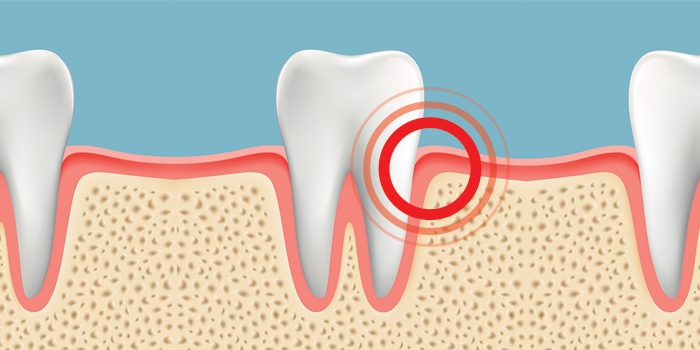
If you experience painful gums when you eat, drink, brush, or floss, you may be wondering what’s causing it and how you can treat it. Painful or bleeding gums can be caused by improper brushing or flossing techniques, gum disease, chemotherapy, tobacco use, or certain hormonal changes. It is very common for gum disease to lead to pain and bleeding, so resolving the problem is an important part of keeping your gums healthy. Your gums provide the overall support for your teeth and the basis of a healthy mouth, and if not properly cared for, early gum disease can progress to other serious oral health problems.
Below are several different causes of gum pain. Being familiar with these causes of gum pain can help you talk to your dental or medical professional when they’re diagnosing the cause of your discomfort.
  • Canker Sores: These are painful ulcers found in your mouth that can cause serious gum pain. Canker sores can be caused by stress or injury to the tissue in your mouth, or an underlying health condition such as an impaired immune system, nutritional deficiencies, or gastrointestinal disease.
  • Cuts or Abrasions: Gum pain can often be caused by a simple cut or abrasion. Braces or other dental hardware such as dentures or retainers can irritate the tissue and cause gum pain.
  • Gum Disease or Infection: Gum pain associated with sensitive or bleeding gums is often caused by gum disease or gum infection. The mildest form of gum disease, gingivitis, affects approximately one in two American adults and can cause chronic gum pain and sensitivity. If not treated properly by removing plaque from the teeth and around the gum line, gingivitis can progress to more serious gum infection.
  • Sinus Infection: A sinus infection, otherwise known as sinusitis, occurs when the tissue lining of your sinuses is swollen or inflamed, and can lead to sinus gum pain. Sinuses are normally filled with air, but when they become filled with fluid, germs can grow and lead to infection. Approximately 37 million Americans suffer from sinusitis each year, so sinus gum pain and dental pain are very common. 
If you notice any of these symptoms along with gum pain, you may want to consult with a medical professional to confirm the diagnosis and get treatment recommendations. Regardless of where your gum pain is located or its cause, chances are you’ll want to address it quickly.

Gum Pain Relief and Treatments

Gum pain can manifest in different ways. Some people experience gum pain in a single area of the gums, while others suffer from gum pain throughout their mouths. If you don’t take good care of your gums, they can deteriorate, become inflamed, infected, cut or even suffer from disease.
While there are many causes for tooth and gum pain, the treatment for most causes is pretty standard. Implementing an effective oral hygiene routine will most often help improve the health of your gums. 
 A few gum pain remedies include: 
Other ways to reduce gum pain may include avoiding the use of tobacco, improving your nutrition, or reducing stress in your life. These important steps combined with an effective oral hygiene regimen can help bring your gums back to good health.
To read the entire article visit crest.com

Bensonhurst Smiles  
Chung Hin Lau, DDS  
6306 18 Ave, 2nd Floor  
Brooklyn, NY 11204  
(718) 232-4044  
BensonhurstSmiles.com
Saturday, July 27, 2019

The Value Of A Teeth X-Ray

Below is an excerpt from an article found on Colgate.com that was written by Steve Auger

When you hear the word "X-ray," there's a tendency to envision a youngster sitting around an ER waiting to see if he or she has a broken bone incurred playing sports or just horsing around. But X-rays are just as important to dentists' offices as they are to those of orthopedists. A teeth X-ray is invaluable to any dentist in the maintenance of good oral health when treating a patient. Here's exactly what they are and how dentists incorporate them into their practices.

X-RAYS
Your dentist visually examines all aspects of your teeth and gums during a typical checkup. A teeth X-ray, however, is a diagnostic tool that allows your dentist to gauge your mouth health through factors he can't see with the naked eye, according to the American Dental Association (ADA). Also called radiographs, X-rays can reveal common issues such as cavities, tooth decay and periodontal disease, all the way to more complex problems such as jaw infections and oral cysts. X-rays aren't just for adults though. Dentists take x-rays of children's teeth for some of the same reasons as adults but also some different reasons.

To read the entire article visit Colgate.com.

The remainder of the article details the following:

  • Children and the dentist
  • Reasons for child teeth x-rays
  • X-ray safety for children

Bensonhurst Smiles  
6306 18 Ave, 2nd Floor  

Brooklyn, NY 11204  
(718) 232-4044  
BensonhurstSmiles.com

Saturday, July 13, 2019

The Top 7 Risk Factors for Oral Cancer (Part 3 of 3)

You know your dentist is looking for cavities during regular check-ups, but you may not realize your dentist can check for cancer at the same time. It’s estimated that approximately 51,540 people will be diagnosed with oral cancer and cancers of the throat, tonsils and back of the tongue in 2018.

Sunlight 
People who have jobs working outside are more prone to developing lip cancer and should use UV protection.


Diet 
Poor nutrition also may put you at risk for developing oral cancer. A diet low in fruits and vegetables may increase your chance of developing oral cancer, so add more color to your plate! 


To read the entire article visit MouthHealthy.org.


6306 18 Ave, 2nd Floor  
Brooklyn, NY 11204  
(718) 232-4044  

Thursday, July 11, 2019

The Top 7 Risk Factors for Oral Cancer (Part 2 of 3)

ou know your dentist is looking for cavities during regular check-ups, but you may not realize your dentist can check for cancer at the same time. It’s estimated that approximately 51,540 people will be diagnosed with oral cancer and cancers of the throat, tonsils and back of the tongue in 2018.

Tobacco 
Whether you smoke it or chew it, tobacco use increases your risk dramatically. Smoking can cause oral cancer, as well as cancer in other parts of the body. Pipe smokers are also at a higher risk for developing cancer in their lips. Smokeless tobacco, like chew, can lead to many issues in your mouth, the most serious being cancer of the cheeks, gums, and lips.


Alcohol 
According to the American Cancer Society, 7 of 10 oral cancer patients are heavy drinkers. Heavy drinking, as defined by the Centers for Disease Control and Prevention (CDC), is an average of two drinks a day or more for men and an average of more than one drink a day for women. If you are a heavy drinker and a heavy smoker, your chances of developing oral cancer increase significantly.  


Human Papilloma Virus (HPV) 
The sexually transmitted disease is now associated with about 9,000 cases of head and neck cancer (specifically those occurring at the back of the tongue, in or around the tonsils) diagnosed each year in the United States, according to the CDC. People who are diagnosed with HPV-related head and neck cancer tend to be younger and nonsmokers. People with HPV-positive cancers have a lower risk of death or recurrence, even though these cancers are often diagnosed at a later stage because it develops in difficult-to-detect areas.  


To read the entire article visit MouthHealthy.org.

Bensonhurst Smiles  
6306 18 Ave, 2nd Floor  
Brooklyn, NY 11204  
(718) 232-4044  
BensonhurstSmiles.com

Tuesday, July 9, 2019

The Top 7 Risk Factors for Oral Cancer (Part 1 of 3)

You know your dentist is looking for cavities during regular check-ups, but you may not realize your dentist can check for cancer at the same time. It’s estimated that approximately 51,540 people will be diagnosed with oral cancer and cancers of the throat, tonsils and back of the tongue in 2018.

Regular visits to your dentist can help you detect such cancers early, and changing a few potentially harmful habits may help reduce your chances of developing them. Read on to find out the top risk factors.


Gender 
Men are twice more likely to get oral cancer. The American Cancer Society attributes this to higher rates of alcohol and tobacco use by men, but says more men of a younger age are being diagnosed with HPV-related forms of oral cancer.


Age 
Most people who are diagnosed with oral cancer are 55 or older, according to the American Cancer Society. HPV-related oral cancers, however, are often diagnosed in people who are younger.  


To read the entire article visit MouthHealthy.org.


Bensonhurst Smiles  
6306 18 Ave, 2nd Floor  
Brooklyn, NY 11204  
(718) 232-4044  
BensonhurstSmiles.com