Showing posts with label nutrition and oral health. Show all posts

Tuesday, July 16, 2019

Family Guide to Oral Health

Below is an excerpt from an article found on Colgate.com

By following the information in this guide, you and your family can have healthy teeth and gums to last a lifetime. As a parent, you can work with your children to help them understand why good oral care is important - and show them how to do it right!

Four Steps to a Bright Smile

  1. Brush at least twice a day with a fluoride toothpaste, especially after eating breakfast and before bedtime.
  2. Floss every day.
  3. Limit the number of times you eat snacks each day.
  4. Visit your dentist regularly.

It's easy to guide your family toward good oral health. All it takes is the right information and a little practice to keep them moving in the right direction!

To read the entire article visit Colgate.com.

The remainder of the article details the following:

  • Infographics on how to brush
  • Infographcis on how to floss
  • A list of preventive dental care tips!

Bensonhurst Smiles  
Chung Hin Lau, DDS  
6306 18 Ave, 2nd Floor  
Brooklyn, NY 11204  
(718) 232-4044  
BensonhurstSmiles.com

Sunday, July 7, 2019

Nutrition: What You Eat Affects Your Teeth

Below is an excerpt from an article found on MouthHealthy.org

Your mouth, teeth, and gums are more than just tools for eating. They’re essential for chewing and swallowing-the first steps in the digestion process. Your mouth is your body’s initial point of contact with the nutrients you consume. So what you put in your mouth impacts not only your general health but also that of your teeth and gums. In fact, if your nutrition is poor, the first signs often show up in your mouth. Here are a few helpful things to know about how what you eat can impact your dental health.

Diet and Tooth Decay
The foods you eat and the beverages you drink can have a direct influence on the incidence and progression of tooth decay, depending upon: 

  • The form of the food-whether it’s liquid, solid, sticky or slow to dissolve makes a difference. 
  • How often you eat sugary foods and beverages and how often you eat or drink acidic foods and beverages. 
  • The nutritional makeup of the food. 
  • The combination of the foods you eat and the order in which you eat them. 
  • Medical conditions you may have, such as gastrointestinal reflux and eating disorders, which can increase risk of cavities and weaken teeth.

How Snacking Affects Your Dental Health
For dental health, it’s recommended that people limit eating and drinking between meals. Of course, sometimes eating between meals must happen. Unfortunately, most people choose foods like sweets and chips for snacks; foods that harm teeth by promoting tooth decay. If you do snack, make it a nutritious choice-such as cheese, yogurt, fruits, vegetables or nuts-for your overall health and the health of your teeth. Did you know that certain foods can put you at risk for cavities and other dental health problems? Here are some MouthHealthy tips.

To read the entire article visit MouthHealthy.org.

The remainder of the article details the following:

  • Recommended Nutritional Guidelines
  • Foods That Harm Your Dental Health
  • Sugar and Your Dental Health
  • How Sugar Substitutes Affect Your Teeth
  • 4 Ways to Reduce Your Risk of Cavities

Bensonhurst Smiles  
Chung Hin Lau, DDS  
6306 18 Ave, 2nd Floor  
Brooklyn, NY 11204  
(718) 232-4044  
BensonhurstSmiles.com

Tuesday, February 19, 2019

6 Ways to Reduce Your Child's Sugary Snacking (Part 1 of 3)


When working with her young patients, pediatric dentist and ADA spokesperson Dr. Mary Hayes teaches them this simple, but important, saying: “Sugar is fun to eat, but not good for your teeth!”

That’s because your child might love sweet treats, but the bacteria in his or her mouth loves them even more. “Sucrose (sugar) is the ‘food’ for the bacteria that cause tooth decay,” Dr. Hayes says. “Those bacteria produce acid that etches away the teeth.”

Limiting the amount of sugar your entire family eats is good for your teeth and key to your overall health. Here are some dentist-recommended ways to start saying good-bye to unnecessary sugar throughout the day.

Know the Limits
When choosing a snack, keep an eye on added sugar (sweeteners like corn syrup or white sugar that are added to prepared foods). Naturally occurring sugars are less worrisome, as they are found in healthy choices like milk and fruit.

The U.S. Food and Drug Administration recommends that people age 3 and older should consume no more than 12.5 tsp. each day of added sugar. (The same as one can of soda.) The World Health Organization states that adults should consume no more than 6 tsp. of added sugar, and children should have no more than 3 tsp. 

When reading labels, you’ll see sugar is listed in grams. Since 1 tsp. of sugar equals 4 grams, aim to make sure the foods you are feeding your child fall between 12 to 50 grams a day.

The Truth About Juice
Because juice is high in sugar and calories, water and milk are always the best options for your little one. In fact, if your child is under 1 years old, the American Academy of Pediatrics suggests completely removing juice from his or her diet. 

Older children can occasionally drink juice, but if they do, there are two things to remember:

  • Children ages 1-6 should have no more than 4-6 oz. of juice each day, according to pediatric guidelines. Children ages 7 to 18 should drink no more than 8-12 oz. (Many juice boxes are about 6 oz., so younger children should have no more than one per day, and older children no more than two.)
  • Allowing your child to sip on juice throughout the day puts him or her at higher risk for tooth decay because you’re giving that cavity-causing bacteria more opportunities to eat and produce the acid that eats away at teeth. This can also happen with juice that is watered down. “Even though the volume of sugar has decreased, you’ve added the time that it takes to drink it,” says ADA spokesperson Dr. Jonathan Shenkin.

So what’s a parent to do? Limit the amount of juice your children drink, and always offer water or milk first. If your child does drink juice, serve the recommended, age-appropriate limits at mealtimes only. When your family is done eating, clean up any leftover juice instead of letting your children leave the table with it.

To read the entire article visit MouthHealthy.org.

Bensonhurst Smiles  
Chung Hin Lau, DDS  
6306 18 Ave, 2nd Floor  
Brooklyn, NY 11204  
(718) 232-4044  
BensonhurstSmiles.com

Tuesday, February 5, 2019

Nutrition Tips: How to Eat Healthy

Below is an excerpt from an article found on Colgate.com that was written by Yolanda Eddis

Healthy eating is essential for your overall health. Choosing foods and beverages that provide the right amount of energy and nutrients goes a long way toward maintaining not only a healthy body, but also a healthy mouth. The Centers for Disease Control and Prevention (CDC) offer numerous nutrition resources, such as sample recipes, menus and educational tools that will guide you in picking out the right foods and drinks to consume. By knowing how to eat healthy, you can improve your physical and oral health, prevent disease and promote healthy growth and development for children and adolescents.

What Is a Nutritious Diet?

Eating a nutritious diet has many benefits. A well-balanced diet should include foods from the basic food groups and subgroups along with the right oils. Nutrients such as carbohydrates, fats, proteins, vitamins and minerals are a staple of healthy diets, but it's also important to avoid eating too many or too few nutrients.

In an effort to assist consumers to learn how to eat healthy, the U.S. Department of Agriculture developed the MyPlate website. MyPlate illustrates the five food groups, which include fruits, vegetables, grains, proteins and dairy, and provides several examples of each. Oils that come from different plants and fish are also recommended although they don't constitute a food group of their own. The selection of foods from these groups can be fresh, canned, frozen or dried. The site also recommends different ways to balance your caloric intake by increasing nutrients and decreasing the consumption of sugar and sodium in meals and snacks.

To read the entire article visit Colgate.com.

The remainder of the article details the following:

  • How to Select Healthy Beverages
  • Healthy Habits after Eating and Drinking
  • Healthy Eating Tips
  • Diet and Dental Health


Bensonhurst Smiles  
Chung Hin Lau, DDS  
6306 18 Ave, 2nd Floor  
Brooklyn, NY 11204  
(718) 232-4044  
BensonhurstSmiles.com


Saturday, October 13, 2018

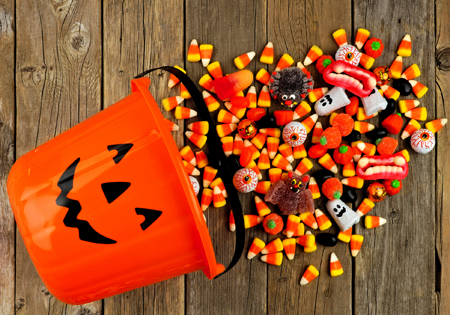
Halloween Candy: Your Dental Health Survival Guide

Below is an excerpt from an article found on MouthHealthy.org

With Halloween comes ghosts, goblins and goodies-and the sugar in those treats can play some unwanted tricks on your teeth if you’re not careful. 

Here’s why: The bacteria in your mouth are probably more excited to eat Halloween candy than you are. When the bacteria eat the sugar and leftover food in your mouth, a weak acid is produced. That acid is what can contribute to cavities. 

But don’t hang up your costume just yet. “Halloween is about candy, dressing up and having fun,” says ADA dentist Dr. Ana Paula Ferraz-Dougherty. “It’s OK to eat that candy on Halloween as a splurge as long as you’re brushing twice a day and flossing once a day all year long.”

To help you sort through the trick-or-treat bag loot, we have a rundown of some common candies and their impact on your teeth:
Chocolate
Chocolate is probably your best bet, which is good because it’s also one of the most popular kinds of candy handed out on Halloween. ìChocolate is one of the better candies because it washes off your teeth easier than other types of candy,î Dr. Ferraz- Dougherty says. “Dark chocolate also has less sugar than milk chocolate.”

Sticky and Gummy Candies
Be picky if it’s sticky. These are some of the worst candies for your teeth. “This candy is harder to remove and may stay longer on your teeth, which gives that cavity-causing bacteria more time to work,” Dr. Ferraz-Dougherty says.

To read the entire article visit MouthHealthy.org.

The remainder of the article details the following:

  • Hard Candy
  • Sour Candy
  • Popcorn Balls

Bensonhurst Smiles  
6306 18 Ave, 2nd Floor  
Brooklyn, NY 11204  
(718) 232-4044  
BensonhurstSmiles.com